CASE · DESIGN SYSTEM · AI
Solar Design System
A multiplatform design system with AI in the pipeline: from token to published component.
01 / OVERVIEW
One source of truth for three platforms.
Solar DS is the design system of the Product Experience Studio at Compass UOL (AI/R Company).
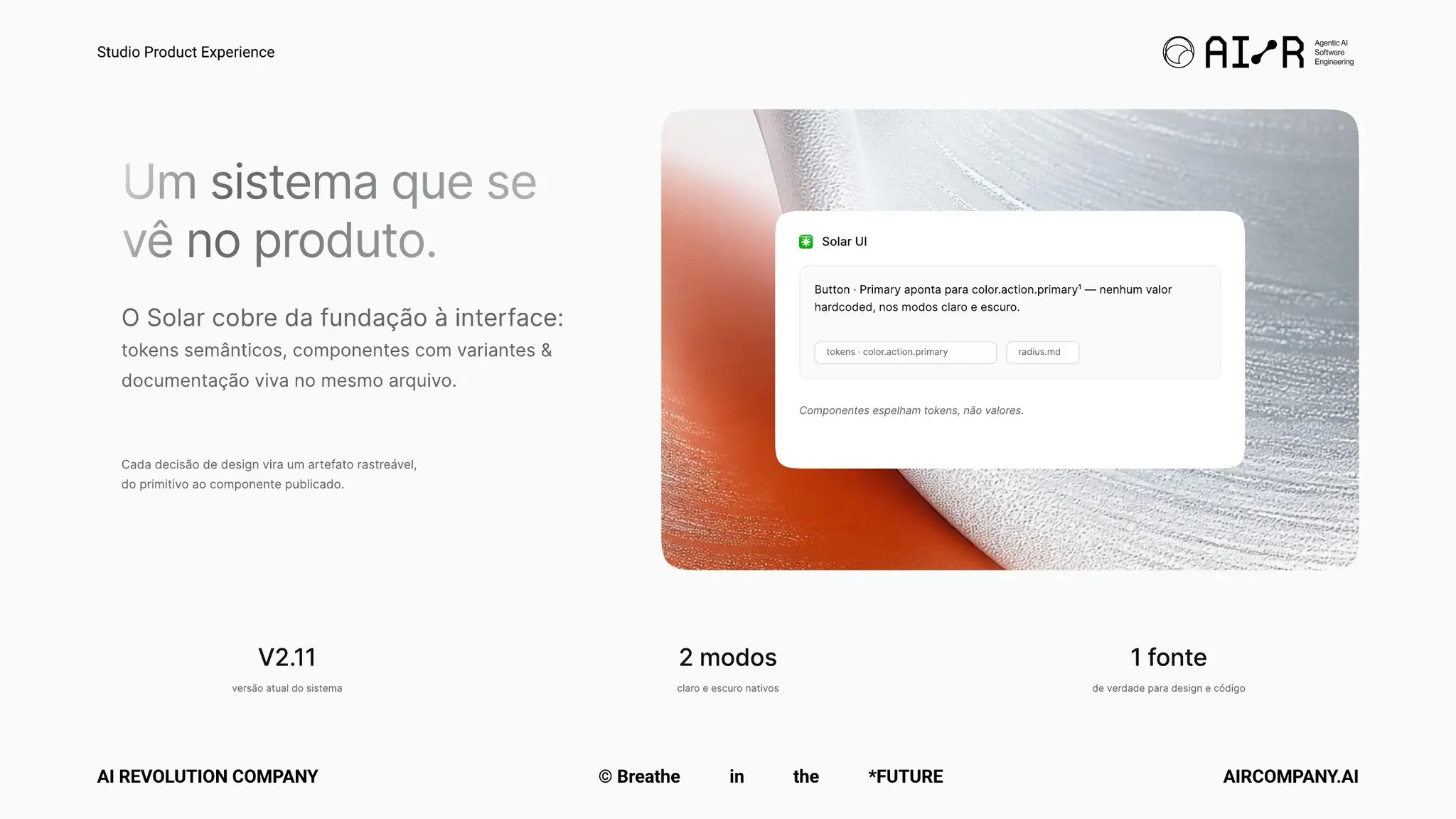
I created a multiplatform architecture for web, iOS and Android from a single source of truth: primitives, semantics, components and platform conventions. Light and Dark are resolved in the semantic layer, and components consume tokens, never hardcoded values.
My role: Solar Design System Lead, responsible for token architecture, component design, documentation, the AI pipeline and governance.
02 / THE CHALLENGE
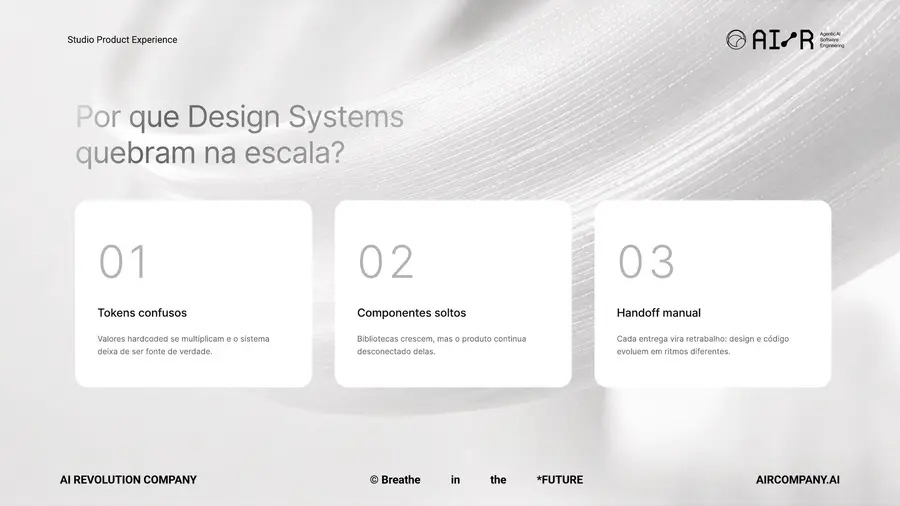
Why do design systems break at scale?
The challenge was to build a scalable system with personality that was also white-label. Before designing more components, I needed to make decisions readable for both people and machines.
Confusing tokens, disconnected components and manual handoff were the three breaking points.
03 / FOUNDATIONS
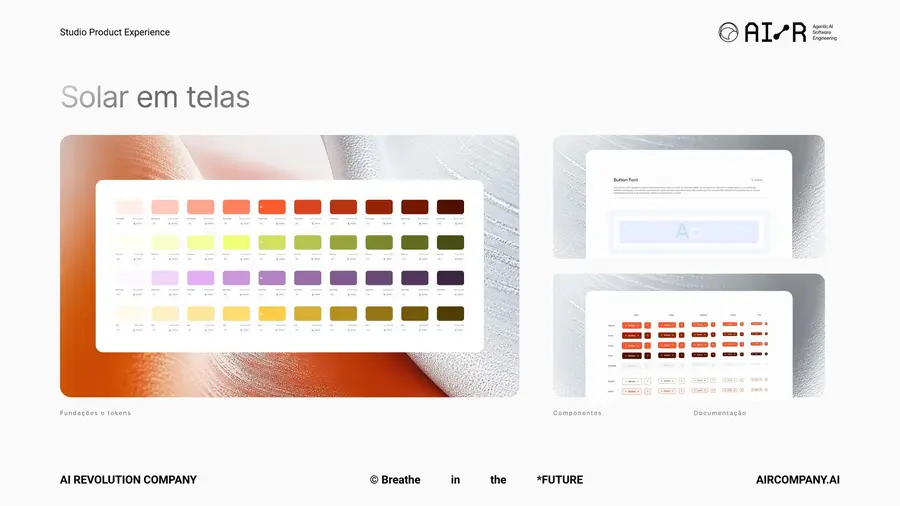
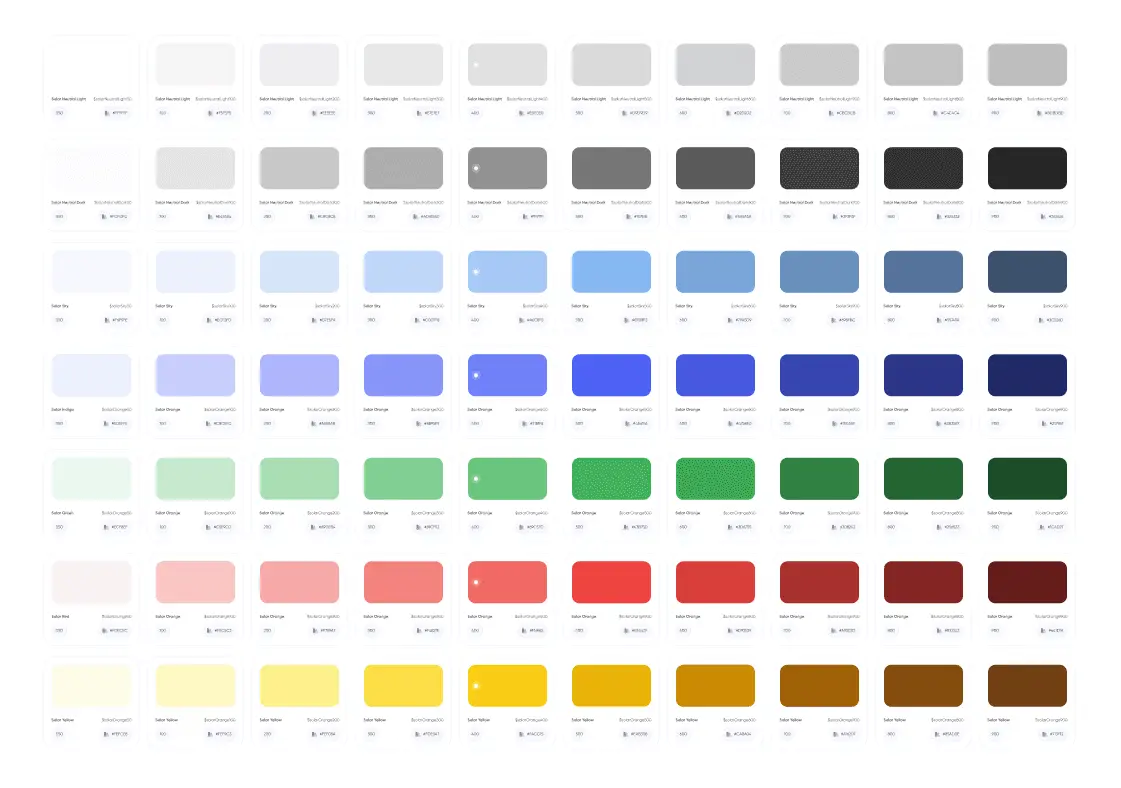
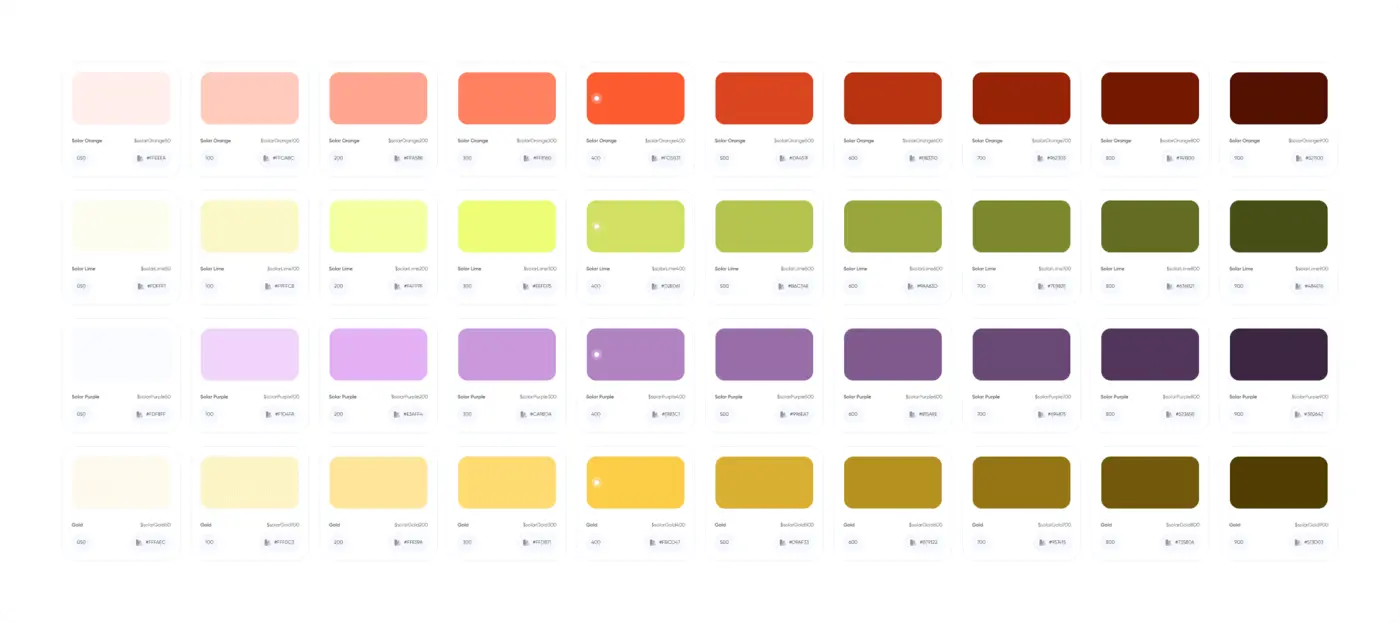
Primitives that become intent.
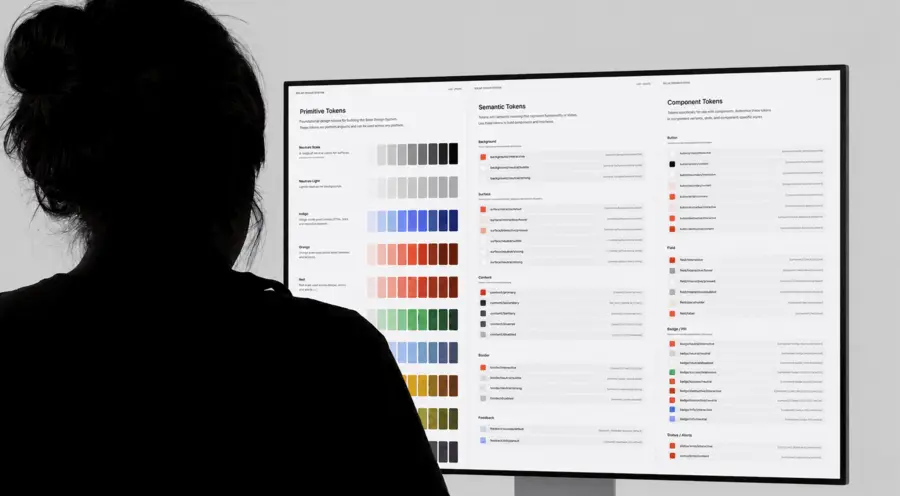
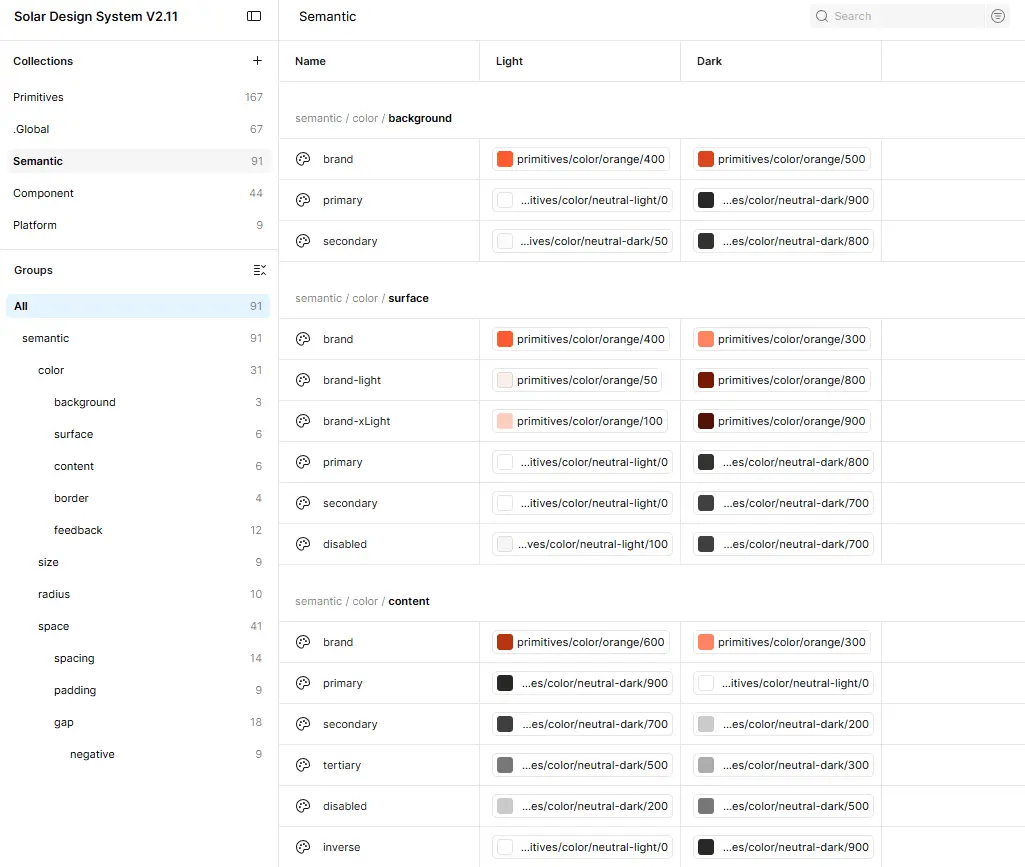
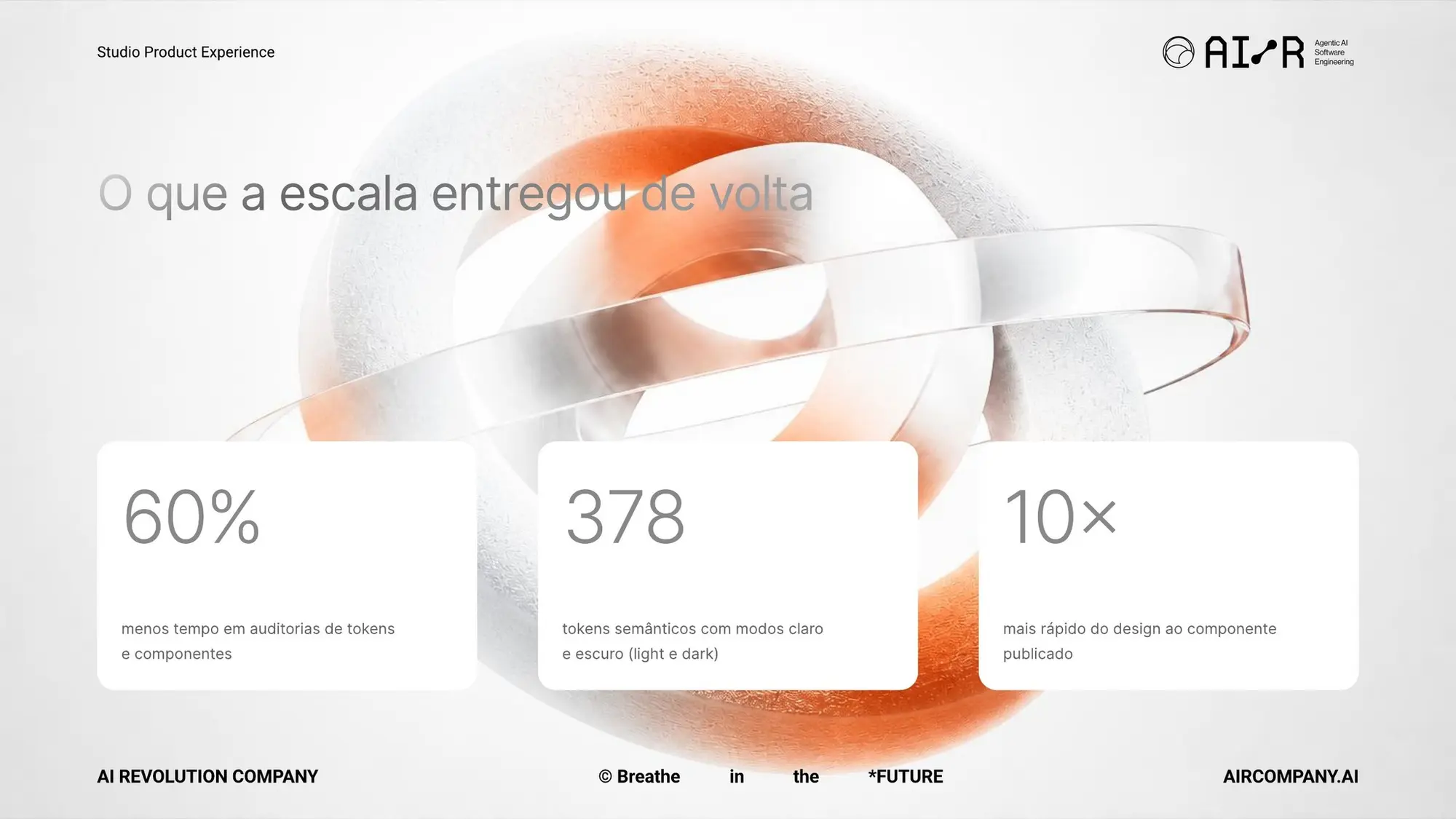
The foundation was built in layers: Primitives (167), .Global (67), Semantic (91), Component (44) and Platform (9). That's 378 variables resolving Light and Dark, plus size (9), radius (10) and space (41).
Semantic tokens translate primitives into usage intent, and typography is a token too.

04 / COMPONENTS
Components that mirror decisions.
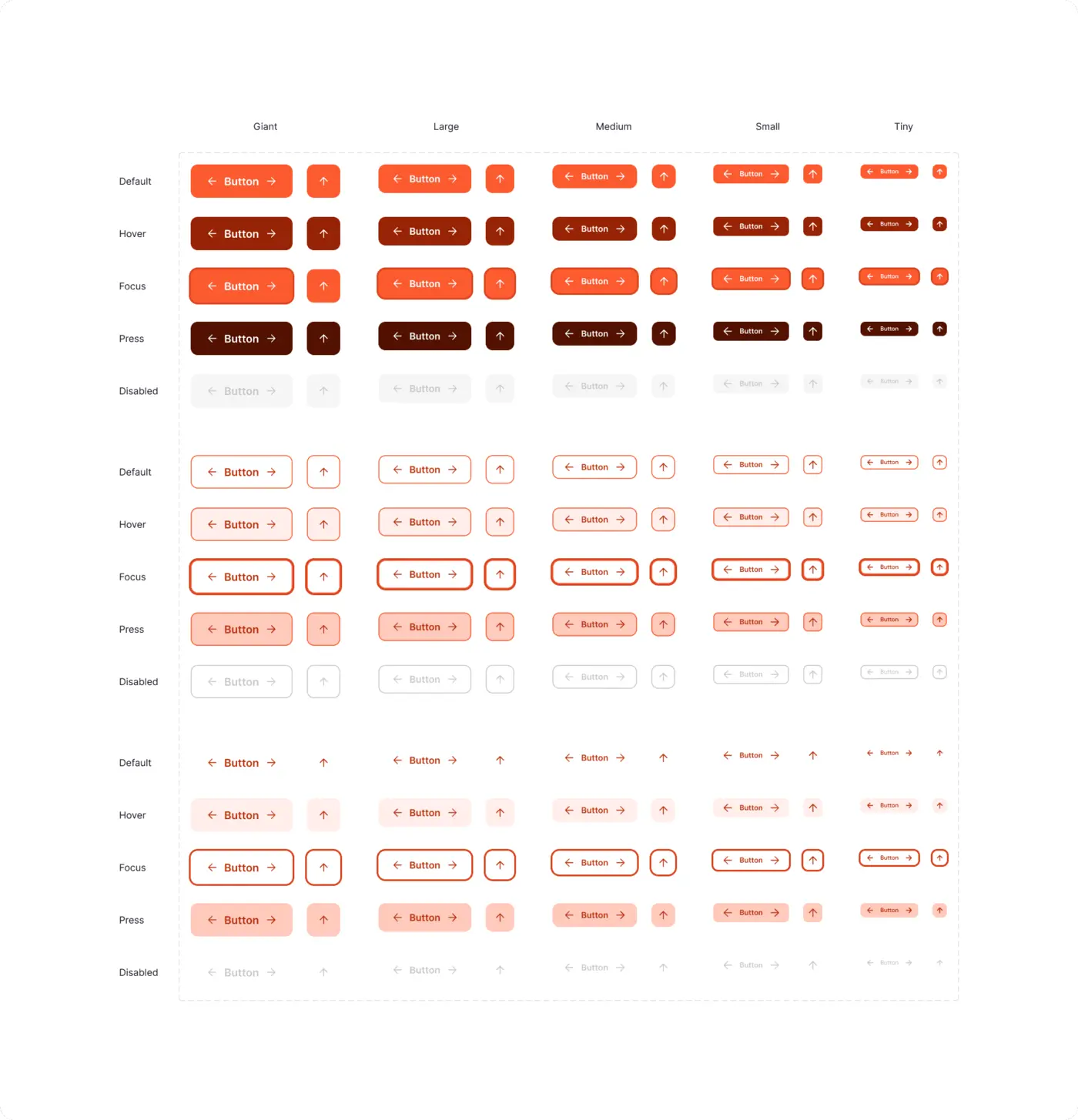
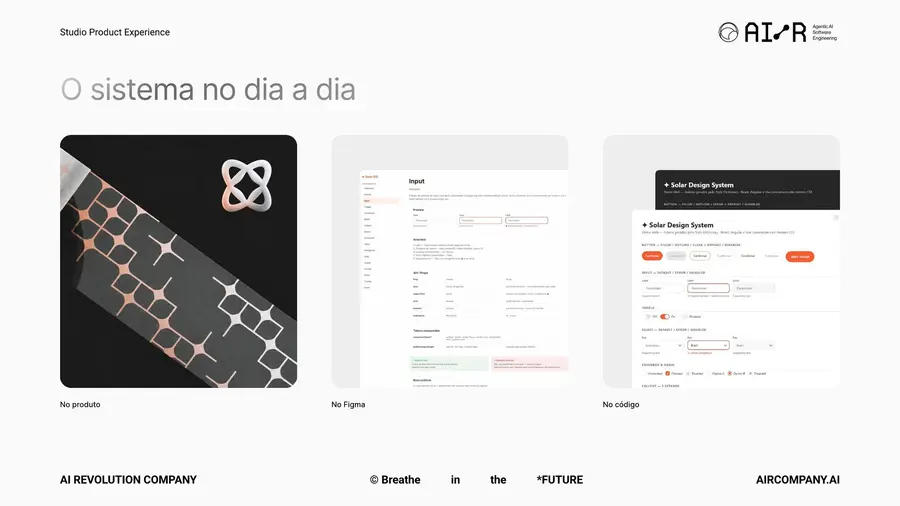
The Button consumes semantic tokens across the whole matrix: 3 variants × 5 sizes × 5 states.
The Checkbox has one documentation for three platforms: rounded on the web, circular on iOS and square on Android. Same intent, native conventions.

05 / SCALING WITH AI
A design system that scales isn't a library. It's a pipeline.
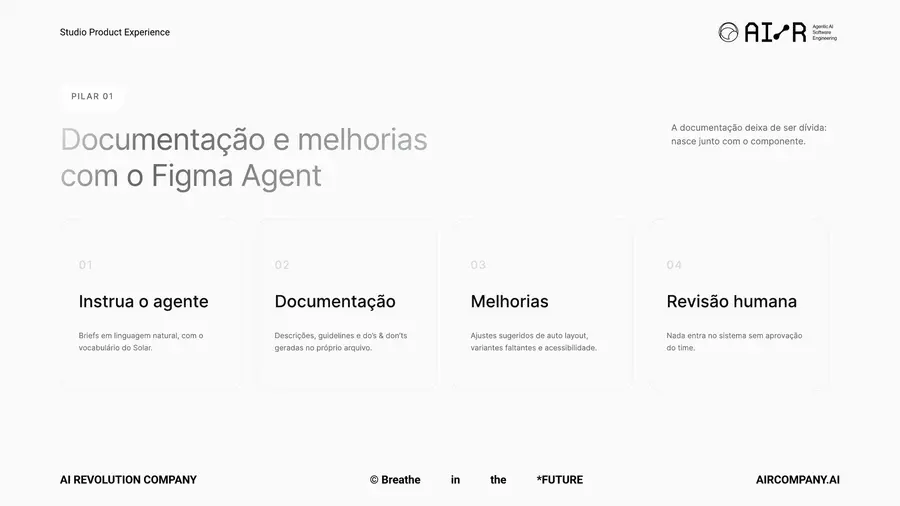
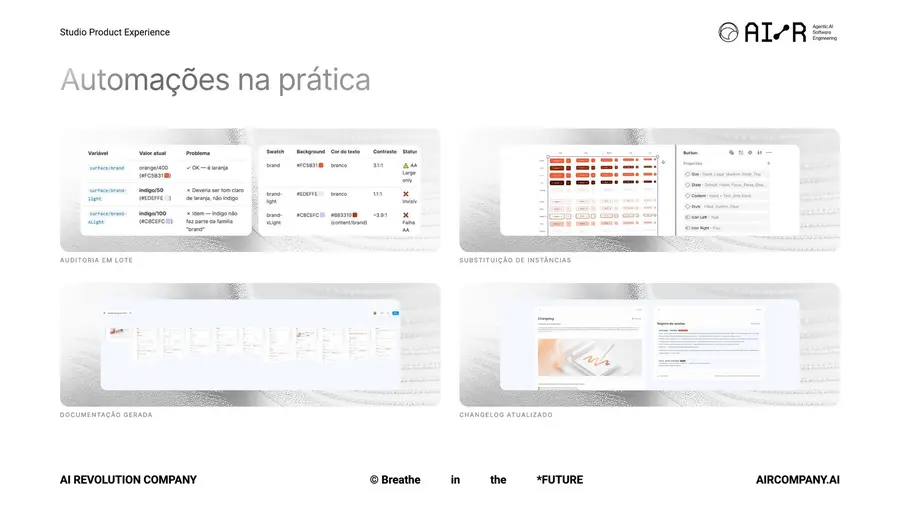
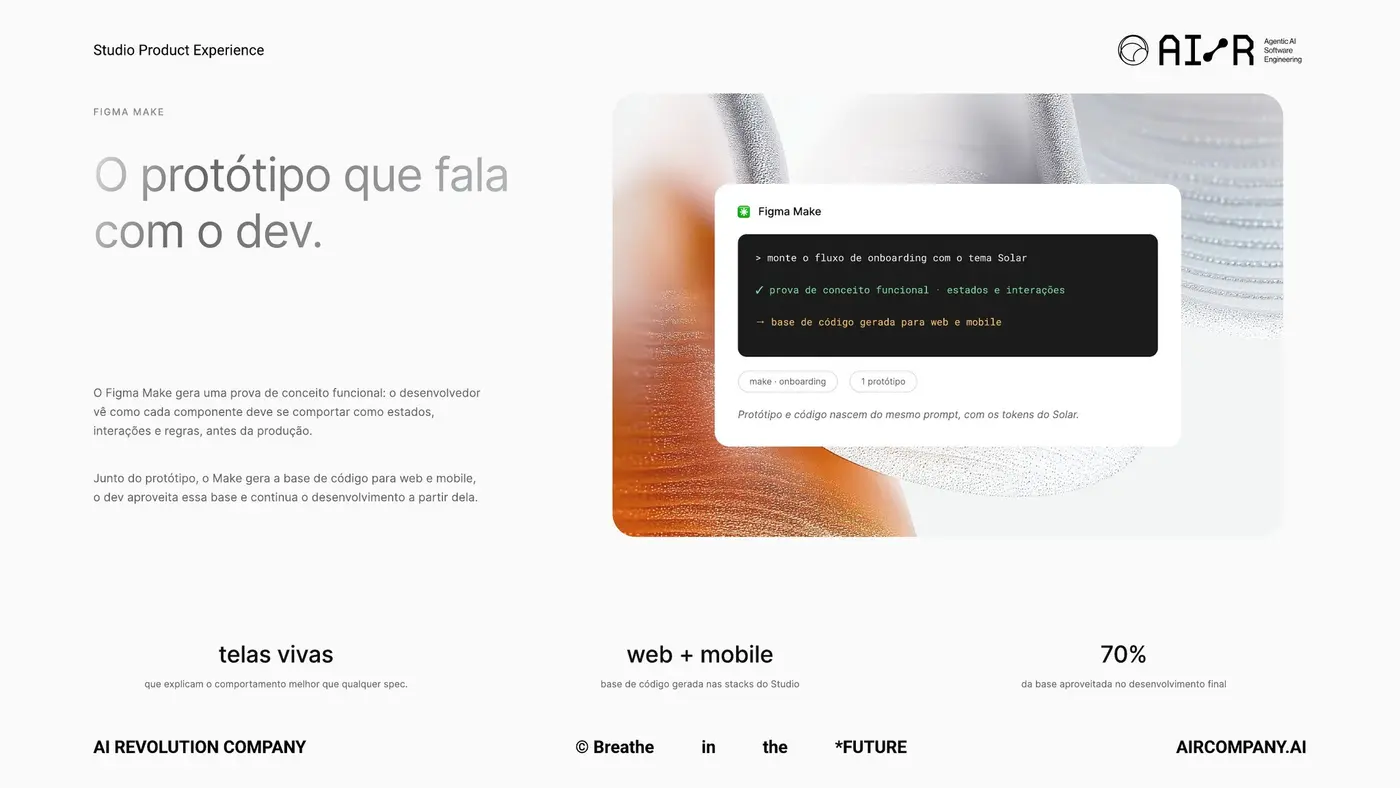
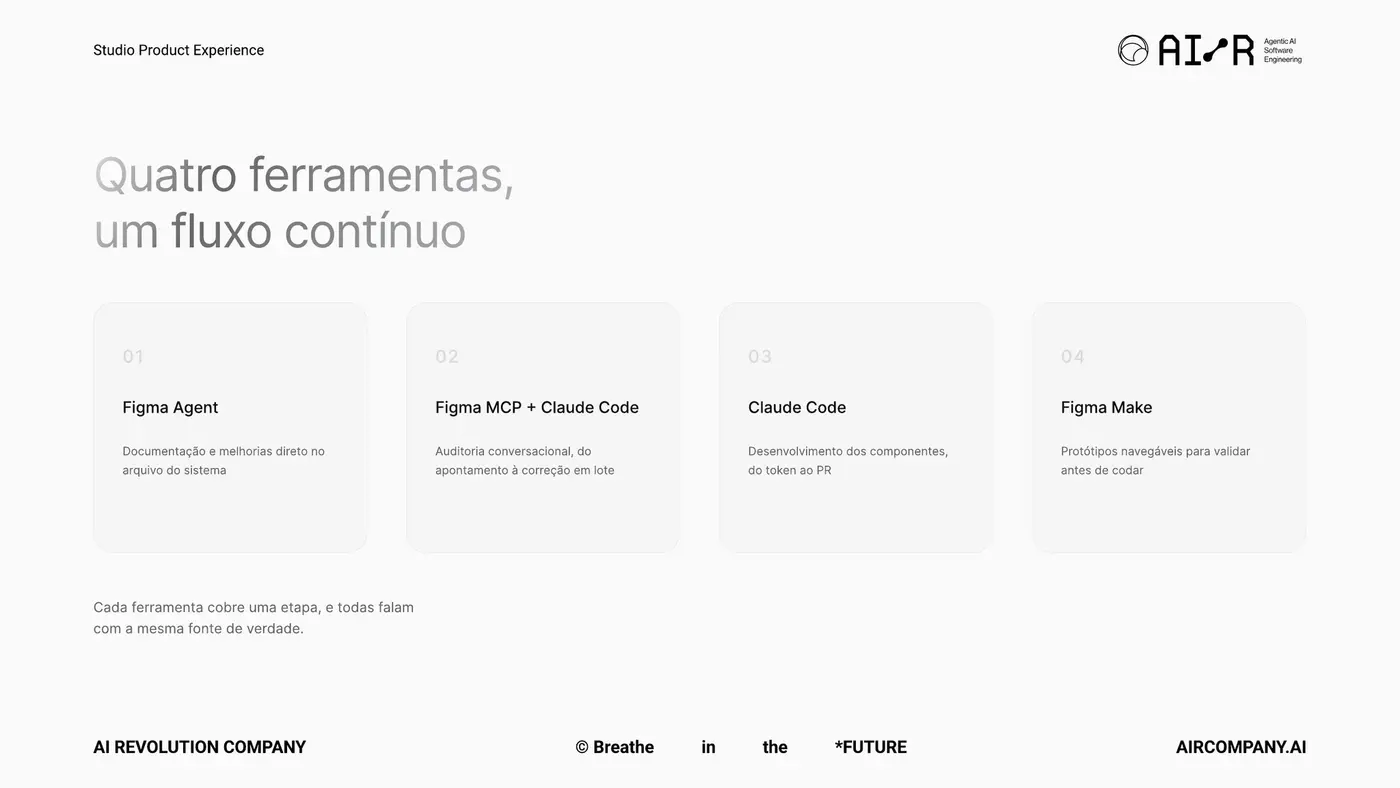
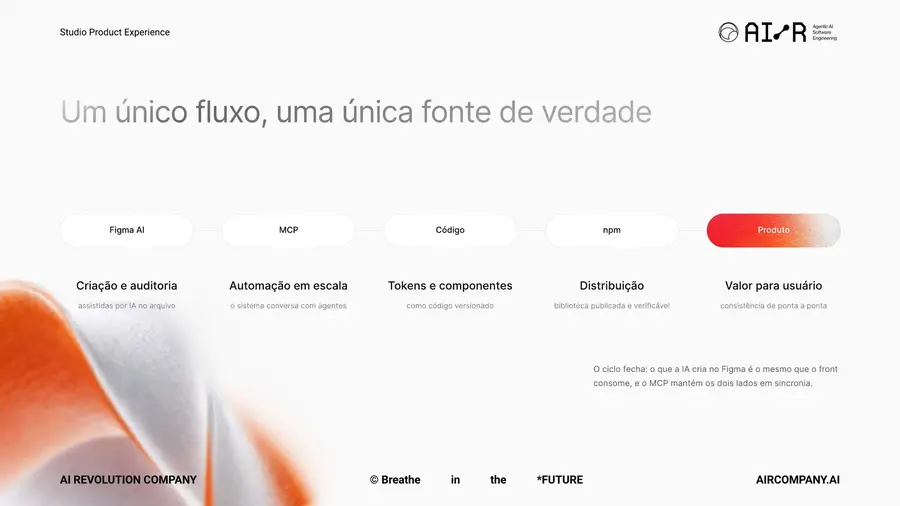
Four tools, one continuous flow: Figma Agent for in-file documentation, Figma MCP + Claude Code for conversational audits, Claude Code to build components from token to PR, and Figma Make to validate prototypes before code.
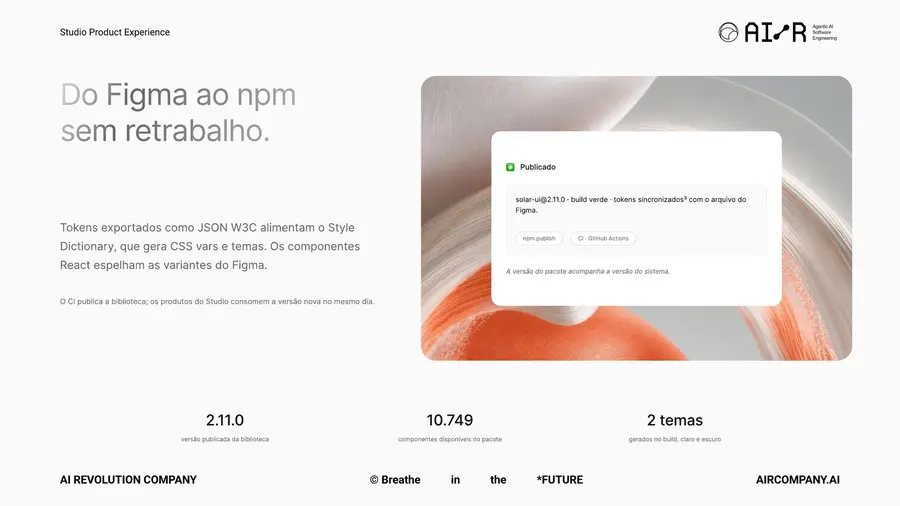
Figma AI > MCP > Code > npm > Product. What AI creates in Figma is the same thing the front end consumes.


06 / RESULTS
What scale gave back.
60% less time spent on audits and 10x faster from design to published component.
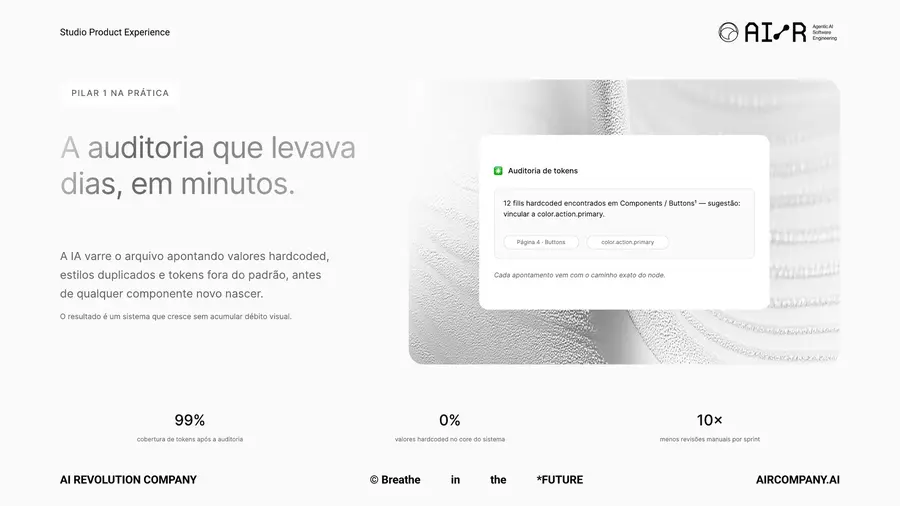
99% token coverage, 0% hardcoded values in the core, 40% of hours saved per sprint, 100% of changes traceable and 10,749 components on npm.
07 / LEARNINGS
AI speeds up the system. Governance gives it direction.
Automating without auditing multiplies debt. Prompts without context make AI invent parallel patterns.
For the next system: tokens before components, naming for machines too, automating the audit rather than taste, and versioning like a product, with changelog, SemVer and governance.

Project overview
CONTEXT
The Product Experience Studio at Compass UOL (AI/R Company) needed a scalable, white-label design system with personality for web, iOS and Android.
PROCESS
I structured tokens in layers, components that consume semantic tokens and an AI pipeline (Figma AI, MCP, Claude Code and Figma Make), always with human governance.
RESULT
378 variables, version 2.11 published on npm, 99% token coverage and a flow from Figma to product with a single source of truth.